


Predictable (Type A or Augmented) reactions ⁃ Augmented pharmacological properties of the drug
Side effects:
• Unwanted often unavoidable Pharmacodynamic effects
⁃ Predicted from the pharmacological profile of a drug
⁃ Reduction in dose, usually ameliorates the symptoms
⁃ e.g. atropine used as preanaesthetic medication for its antisecretory action. Produces dryness of mouth as a side effect.
-e.g. Promethazine antiallergic medication produces sedation, unrelated to its action
Effect may be therapeutic in one context & side effect in another context,
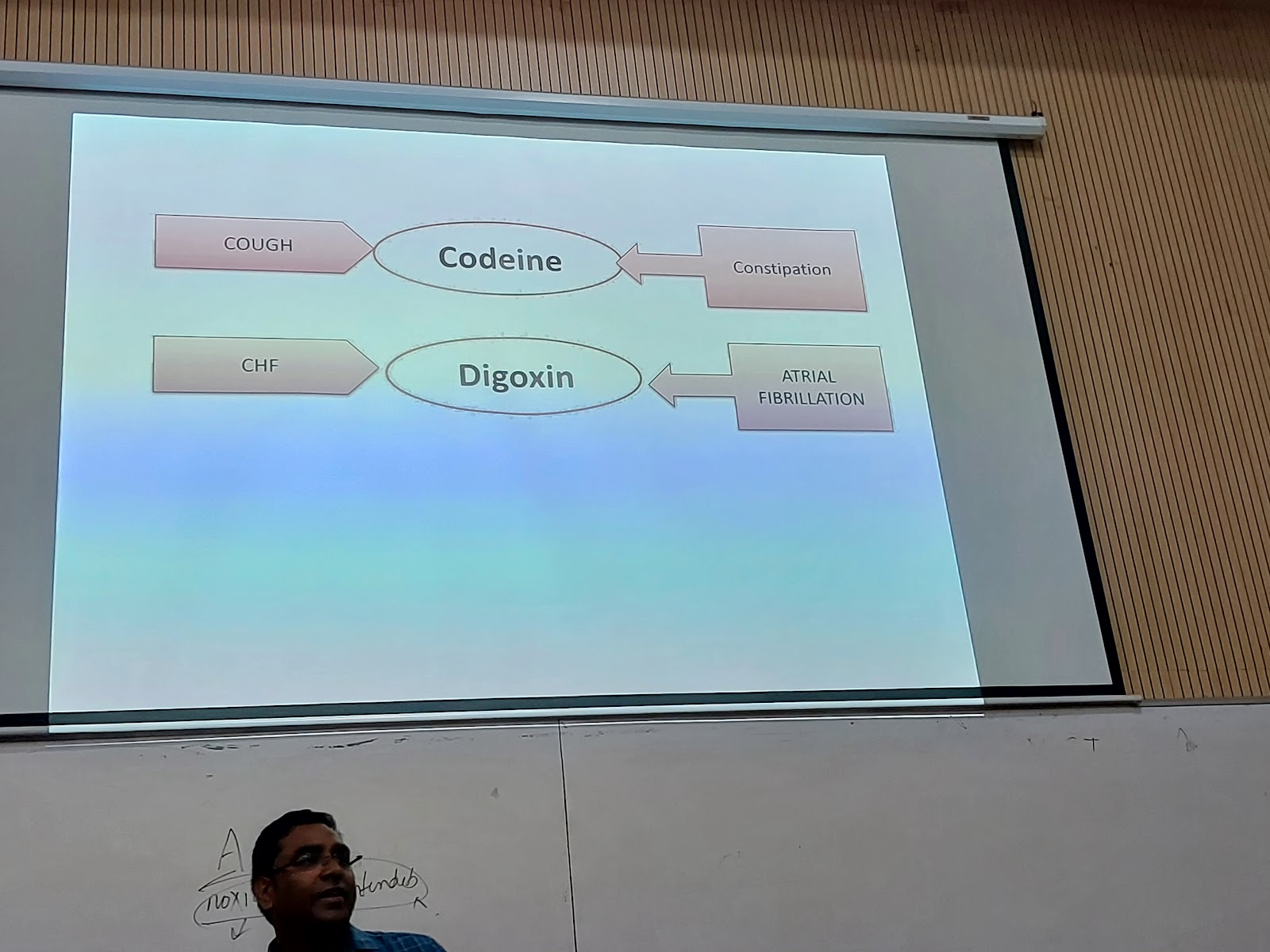
e.g.Codeine used for cough produces constipation as a side Effect, but the latter is its therapeutic effect in Traveller's diarrhea
⁃ Digoxin: Depression of A-V conduction, desired in atrial fibrillation, but the same may be undesirable When it is used for CHF
2. Secondary effects ◦ Indirect consequences of a primary action of the drug
e.g. 1. Suppression of bacterial flora by tetracyclines paves the way for superinfections;
2. Corticosteroids weaken host defence mechanisms so that latent tuberculosis gets activated .
3. Toxic effects ⁃ Occurs as a result of excessive pharmacological action of the drug due to overdose or prolonged use.
⁃ Clinical manifestations are predictable and dose related
Either due to functional alteration (high dose of atropine causing delirium) or ⁃ Drug induced tissue damage(hepatic necrosis from paracetamol overdosage)
⁃ Extension of the therapeutic effect itself
e.g- Coma by barbiturates, Complete A-V block by Digoxin, Bleeding due to heparin
Unexpected Undesirable Effects (TYPE-B) ADRs
Arise unexpectedly even at therapeutic doses, mechanism not related to the main pharmacological effect of the drug,
⁃ Either immunologically mediated reaction to the drug ⁃ Pharmacogenetically mediated adverse reaction or idiosyncratic reaction
⁃ These are grouped as unpredictable reaction as no linear relationship with drug doses exists
⁃ These are relatively uncommon but if occur, mortality rates are high.
⁃ Reduction in dose does not reduce the risk of type B ADRS
Drug allergy (hypersensitivity)
◦ An immunologically mediated reaction producing symptoms unrelated to the pharmacodynamic profile of the drug ◦ symptoms may appear even with smaller doses ◦ This is also called drug hypersensitivity
◦ target organs affected include; skin, airways, blood vessels, blood cells and gastrointestinal tract
Mechanism and types of allergic reactions
◦ Type-l (anaphylactic) reactions:
⁃ (IgE) are produced which get fixed to the mast cells and basophils
⁃ On exposure to the drug, ag: ab reaction takes place on the mast cell surface ⁃ Release mediators like histamine, 5-ht, leukotrienes prostaglandins, paf, etc.
⁃ Manifest as urticaria, itching, angioedema, bronchospasm, rhinitis or anaphylactic shock.
⁃ Need immediate intervention
Usually with Penicillin group of drugs.
haptin ?
No comments:
Post a Comment